Tag Archive | PERSEPHONE IN HELL

High Expectations

DREAMS AND MELANCHOLY

Spring tulips and daffodils

Spring tulips and daffodils

Over the years I’ve set some high standards for myself, goals that became more like self-imposed requirements than ideals to strive for. College, graduate school, a healthy family, a beautiful home, a satisfying career. I’ve worked hard and achieved most of those goals I set out to attain.

I’m wondering though, why I think all these accomplishments aren’t enough. Maybe it’s the Chinese fortune cookie I picked out of a takeout bag that has me yearning for more. ‘Your success will astonish everyone’ it said. Perhaps I expect greatness from myself. I crave brilliance. I’m disappointed with my mere competence and above average show. It’s a personality flaw of the highest degree. One of my sisters said it well – “I’m happy with the small things in life,” she said, “while you are not. That’s the difference between us.”

In PERSEPHONE IN HELL, Glory has just named her sister Queen Penny the Good for saving their tiny brother Davey from a car fire at the dump. But somehow, Penny can’t accept the title. Fear that she is not good enough invades even her nightmares.

“Penny woke up with a start. Tears streamed down her face. Her little sister Kit was dead, in a heap at the bottom of the stairs. She couldn’t save her. She had saved Davey but she couldn’t save Kit. Penny was heartbroken. She knew she would never be good enough, not for this family with their high expectations.

But she couldn’t save everyone – how could they expect it of her? She was only a girl herself, not a queen or anyone’s mother. I’m not Penny the Good, she thought. Not good or brave or strong. She hated her family for imposing this burden. Hated herself for her inferiority, for not being able to live up to their ideals.”

Where does this burden of expectation come from? It’s a load so weighty it can rob a young girl of the very desire to live. A goal so high it becomes a dream destroyer. A demand so insidious it paralyzes with fear of failure. I do this to myself, I know I do. I couldn’t save my brother from taking his own life. A personality flaw in the highest.

Is there greatness in me? Is there greatness in me?


Are Teachers Human?

CALMLY RANDOM


Something strange happened to me when I hit the high school years. Maybe it happened to you, too.

When I was a little girl, I loved school. I mean, I LOVED school. By age 3, I was playing school at home. I’d get out my chalk board, crayons, paper, and books, and pretend I was a big girl going off to school with my older sister. My town didn’t have kindergarten (tells you how old I am – though, yes, kindergarten had been invented!) And my birthday was such that I missed the cut off date for first grade by a month. By the time I finally arrived at first grade, I was almost 7 and had been reading for years.

My teacher was in heaven listening to me read. She sent me up to the principal with my book that was clearly 5th grade level or higher. I was a bit scared to walk into her office, but I read to her with all the passion that I hold for reading to this day. After I was done, the principal hugged me! This is the woman that I had been told put red hot peppers on kids’ tongues if they’d been bad.

Over the early years, I experienced good and not so great teachers, interesting subjects and not. But I managed to hold onto my positive thoughts about school through 8th grade.

So what makes a straight A student from grades 1 through 8 turn into a teenager who hates school? That’s a mystery that is at the core of my novel PERSEPHONE IN HELL.

“The teachers were always catching Glory in a day dream or staring out the classroom window. Mrs. Hansen, her history teacher, seemed to make a game of writing up detention slips. I suppose it makes my sadistic, twisted, inhuman teacher happy. Today, Mrs. Hansen was drilling the class on the succession of English monarchs. Even though everyone knows that memorizing lists of long dead kings is an exercise that could make even the best student want to vomit. Worse even than studying the names and dates of battles and wars. Well, maybe it’s a tie between the two for deadliest.”

Was it the content of the class, or the teacher teaching it that made high school so fatally boring? Were my teachers really human? Did they have first names, families, lives outside the classroom? I thought of them as inhuman, or less than human, or simply so uninteresting that I didn’t think of them at all. Was it true, or was it me? Perhaps I had just turned some corner in life, never to look back. For the sake of consistency, ignoring that long ago hug that acknowledged me as a special person, perhaps a cut above the average, a person of note. Forgetting that I was a queen in my own right.

Tidal Wave

TIME AND OTHER NONSENSE

The news today came instantly from across the wide world, all the way from the other side of a vast and angry sea. From Japan, over satellite, we saw videos and photos of massive earthquakes and giant tsunamis, as they were happening. Within minutes, even seconds, we Americans bore witness to the fury of Mother Nature unleashed on Japanese soil. It was a shock sent round the world, breaking apart whole villages, slamming into continents, traveling 500 miles an hour or more. Though awed by the destructive power of an earth gone mad, we’re impressed but not awed by the immediacy of our news links.

How different the world was in 1968; an eternity away from 1584 when Sir Walter Raleigh sailed the high seas and named the new colony Virginia for his virgin queen. In PERSEPHONE IN HELL, teenage Glory experiences the world more like Queen Elizabeth I than like any modern girl today.

“There are idiots and savages all around. And no one to defend me from them. It was no wonder Queen Elizabeth sent scouts to the new world while she herself stayed home. It’s boring being safe, but probably, better than being abused. I thought idiot jerks were only in my backwater town, but in fact, they’re everywhere. Even a queen has to wait, sometimes for years, for news from across the sea. Savages are everywhere. And the new world I’m longing for is oceans away.

Someday, I’ll be free to go wherever I want, whenever I want. It will be a new world, and no dumb creeps will stop me from getting there. She took some small comfort in her thoughts.”

For Glory, there is no immediate news, no quick cure, nothing to do but hold on tight. Accept the disasters and difficulties of her life. Wait for events to unfold.

Sometimes it hits me like a shock wave, how fundamentally altered from 1968 our lives are today. It’s almost an eternity, a sea of time away.


Time Stands Still

TIME AND OTHER NONSENSE

When I was a teenager, I could count on a few things. One, my life was boring and relentlessly so. Two, there was absolutely nothing of any entertainment value happening in my old home town. And three, time had a way of taking so long to pass that it seemed virtually to stand still.

I disliked high school very much. Okay, that’s four. Along with the going to school (already remarked upon at length), there was the reality of the school day itself. Whether the subject was biology or algebra, Spanish or civics, I’d look at the clock in my classroom – 10:20. A half hour later, I’d look again – 10:23. And again when I was sure the bell had to sound any second – 10:23. Even my disturbingly handsome trigonometry teacher, Mr. S___, couldn’t persuade me to keep my eyes off the clock. You know the old saying about the pot that never boils? Watching that clock like I did, dragged out a perfectly standard school day into a universe of time.

And so it is for my character Glory in PERSEPHONE IN HELL. In this scene, she’s in history class, watching a spider up on the ceiling when she should have been listening to the teacher.

“Miss M____, are you still with us?” sneered Mrs. Hansen. “Can you tell me which monarch, which king was next in succession?” A trick question for sure.

Glory looked squarely at the teacher with her piercing violet eyes and replied in her straightforward way, as though she had been listening all along. “The great queen, Elizabeth the First, of course.” The class burst out laughing – Glory was so good at showing up the teacher. Mrs. Hansen turned red, furiously scribbled out a pink detention note, and slapped it on Gloria’s desk.

Glory looked up and saw the daddy long legs gone, escaped from the classroom. The spider at least, is free. She hoped with all the fierceness of her spirit that it was female.”

Now you might be thinking by this now that Glory is really me in disguise. But the truth is, I never got detention. Maybe once. Spiders freak me out. And I always paid attention in class. That’s the truth, for the most part.

Cleopatra

DREAMS AND MELANCHOLY

The Queen of the Nile. A goddess beholden to no one. Left to float down the river on her own if she so commands, or to read sci-fi novels in bed with a pack of cigarettes. Joyce is Glory’s mother in PERSEPHONE IN HELL, my novel set in 1968. Glory has stayed up late, waiting for her mother to come home from work. It’s hard to gain Ma’s attention. And Glory’s lonely. She despises her name, hates her life, wishes for an existence she can only imagine.

“Ma?” she wondered. “Have you ever wanted to be rich and famous, like a movie star? Have you ever wanted to be someone besides yourself? If you could be a queen, Ma, who would you be?”

Glory’s mother considered the exhausting day she had just finished. “I suppose Cleopatra,” she replied. “Why? Cleopatra floated down the Nile on her own barge. She could be alone anytime she wanted. She made rules to suit herself.”

Ma took a drag on her Chesterfield and flicked the ashes into the kitchen sink. “Oh, and she drank lovely coconut milk and ate figs dipped in honey. Egypt is hot but not ungodly humid like here in summer. She had the gentle breezes of the Nile to keep her cool. Yes, I’d be Cleopatra if I had a chance.”

Joyce scraped her scrambled eggs onto a plate and took a last drag of her cigarette. She looked for an empty ashtray. Every one of them overflowed. She dropped the butt into a coffee cup left on the table from breakfast. She closed her eyes for a moment and luxuriated in the notion of being all alone.”

Joyce doesn’t mean to neglect Glory. It’s just that she, like her daughter, is broken by the circumstances of her difficult life. And don’t we all wish at times that we could be someone else, anyone else?


Monday Mornings with Robin Hood

DREAMS AND MELANCHOLY

I hate Monday mornings. I don’t suppose I’m the only one in the world who’s ever said that. But I am passionate in my hatred. First of all, to make it clear, I am not a morning person! I want to stay up late like the grownup I am, and sleep late, too. Because I do love my sleep! Second, I’ve undoubtedly lost precious hours of it on Sunday night trying to extend the weekend to the last possible moment. Third, Monday means…work, and commuting, often driving in the snow and ice, and facing another week. To be clear, I don’t hate work, just going to work. I get the shakes just thinking about it. Consider the entire scenario, and you get why I despise Monday mornings. It’s something I and my character Glory have in common in my novel PERSEPHONE IN HELL.

Glory is a 15 year old beauty who hates going to school. She’s skipped so often, the principal finally calls her mother who, for the first time in seven Mondays, makes sure Glory leaves the house in time for the first bell. In many ways a typical teen, Glory is not dressed for winter.

“It was the dawn of miseries. Even the goddess Aurora herself, pulling the sun through the heavens in her chariot of gold and red, couldn’t have wished for that particular daybreak. Glory trudged down the snowy street in her mini skirt and open-toe platform shoes to school. She walked on the edge of the street in the slush. Dirty lumpy piles of it frozen everywhere. Bad enough it’s Monday. Who wouldn’t despise Mondays? Waking up at six a.m. on any day of the week is pitiless. But Mondays are downright abusive. It’s still dark out. What kind of farmer do people think I am? I need my sleep. The north wind showed no mercy.”

Glory hitchhikes her way down the frozen road. She finds a ride in the first truck to come along. In a trance, she fantasizes about Robin Hood (she’s into Robin Hood, definitely!) as the truck driver who can’t believe his good luck gets warm.

“Glory’s intense violet eyes strained to see through the foggy glass. Robin stopped hiding in Sherwood just long enough to save Maid Marion from being forced to marry the evil Sheriff of Nottingham. Where is Nottingham, anyway? And where was good King Richard when you needed him? Off to fight the silly Crusades. That’s a man for you. You can’t count on good winning out. You can’t count on men being good. And you couldn’t count on any man, not even a lionhearted king, to protect you from the slime bags of the world. No man but Robin, of course, and he isn’t real. You can’t keep a real man from forcing his way on you.”

Ask Not

TIME AND OTHER NONSENSE

flag-2

January 20th is Inauguration Day, the day an elected U.S. president is sworn into duty. This year was the 50th anniversary of President John F. Kennedy’s inaugural address. I don’t remember this speech, considering I was eight years old when he delivered it. I do recall very well the day he was assassinated. I was ten years old by that time and more cognizant of the world. I remember my teacher crying as the principal of the school announced over the loudspeaker that the president had been shot. I walked home after school as always, and saw my older sister crying as she caught up with me on the sidewalk. I remember saying, ‘we didn’t even know him, why are you crying?’ and her reply ‘you are too young to understand.’

It was clearly the end of an era, the end of Camelot, the end of innocence for an entire generation. JFK wasn’t a perfect president. In fact, with the Cuban missile crisis, we almost went to war. But his most important words live on, and instruct us well if we care to listen and learn. “Ask not what your country can do for you,” he said. “Ask what you can do for your country.” Our new era of individual liberties, self obsessions, and demands for instant gratification overshadow any sense that the common good should even be considered. His words sound almost quaint in today’s context.

But there was a time when individuals put aside their parochial concerns and turned their minds to greater ideals. This passage from my novel PERSEPHONE IN HELL brings back Glory’s memories of the moon landing.

“…it was the event of a lifetime, of a hundred thousand lifetimes. It was July 20th in the year 1969 – the first time ever in the history of humankind that a man would walk on the moon.

The Apollo 11 lunar module. Neil Armstrong, Buzz Aldrin, Michael Collins. They were the talk of every conversation, the images behind every thought, everybody’s greatest heroes. The Eagle has landed, Armstrong said. That’s one small step for man, one giant leap for mankind. A human footprint on the surface of the moon, an inconceivable fete. Of course no one could think of anything else.

Perhaps it was the end of an era, the end of time as we know it, of a time when people had limits and old ways and weights placed on them so they could barely move forward. So even the brightest and best could only inch ahead.

Or maybe it was the beginning of time, a time of anti gravity, of breaking free from the old constraints, of leaping lightness, of acceptance and tolerance for new ideas.”

Though I was only a child when President Kennedy lived, I remember the pride and passion that he inspired people to feel for their country. Not in a bullying ‘we are the greatest’ way. Not in a phony ‘love it or leave it’ way. But with respect and pride for the incredible accomplishments of the day, and hope for a better future. That is the legacy that President Kennedy left us. That is the part about him that I will always remember.


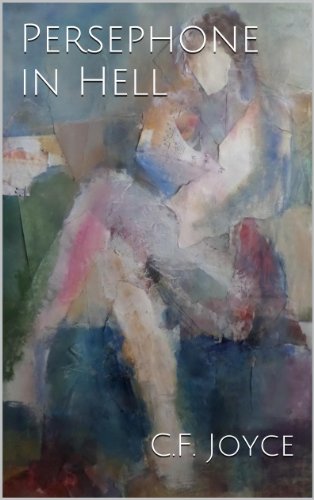
Persephone in Hell: a novel by C.F. Joyce

Persephone in Hell by C.F. Joyce, Westport River Publishing August 2014. Find her on amazon. com.Only $2.99 for one of the best e-reads of your life. Or buy it in print paperback for only $14.95 @ PERSEPHONE IN HELL.

Troubled teenage Glory imagines herself a mighty queen, but discovers in her 1968 Massachusetts town that even queens have to watch their heads as savages await. Glory and her family move from Boston city life to rural cow country where people have heard of Jews but never seen a real one. A coming of age tale of a girl who doesn’t understand why her sister won’t talk to her and even Mother Nature seems out to get her. She cries out to the gods for help. But nobody sees her terrible self inflicted wounds. No one is paying attention. In this coming of age debut novel, C.F. Joyce explores the roles that family histories, clashing cultures, and dysfunctions play in the life of a young girl.


Under the working title “Memories of Glory”, the novel won a HarperCollins Top 5 Gold Medal award. Here are some of the reviewer’s comments:

“It is very difficult to approach a ‘coming of age’ story, and write in such a way as to not appear clichéd, but [the author] has made a remarkably strong case. In ‘Memories of Glory’, the journey from childhood to adulthood is dealt with in a unique way; the six children in Glory’s family are used to explore various different facets of growing up. The reader is also able to understand more about the pasts of Glory’s parents and their families, allowing adult tensions to be explored too. A compelling feminist take on life dominates, but the feelings of the important men in Glory’s life are not left uncovered. The memories she recalls do not depict a clear straightforward story, rather each is a part of a puzzle which in the end paints an often brutal but fair conclusion on life…Glory is set up well as a whimsical day-dreamer. She lives in an alter-world, and her intelligence and desire to be elsewhere helps build a strong picture of her imagination. Gradually it becomes clear that the world she fashions for herself is an escape from the harsh life that she has had to lead. As a protagonist she is wonderful; her suffering is a result of both her surroundings and of universal teenage trauma: I found her hugely accessible…The use of dialogue, and the focus on different characters in each recollection, allows the reader to build a strong concept of each family member, and their relationships with one another. This is a vibrant read, and no connection is left unexplored. Friendship, as well as sibling rivalry, is beautifully drawn out…The author clearly has a gift for wit and charm, illustrated in the passage where the family go blueberry picking…The role of “Mother Nature”, of fate and fortune, is an interesting theme and one that gives an interesting dimension to the family’s attitude.”